
Similes for being happy help writers and speakers describe joy, excitement, and satisfaction more vividly and memorably. Instead of simply saying someone is happy, you can compare their feelings to sunshine, a bird in flight, or a child on Christmas morning. Understanding these expressions makes everyday conversations, creative writing, and storytelling more engaging.
Comparison Overview
Similes for being happy are expressions that compare a person’s happiness to something familiar, using words such as like or as. They help readers imagine what happiness feels like rather than simply reading a statement about an emotion.
Unlike ordinary adjectives such as happy, cheerful, or delighted, similes create pictures in the reader’s mind. Different similes can communicate different kinds of happiness, including quiet contentment, overwhelming excitement, relief, and lasting satisfaction.
For example:
- As happy as a clam: Describes someone who feels content and comfortable.
- As happy as a lark: Suggests someone cheerful and carefree.
- Like a ray of sunshine: Describes a person whose cheerful presence brightens the mood around them.
- As happy as a child on Christmas morning: Expresses intense excitement and anticipation.
- As if walking on air: Describes the light, joyful feeling that can follow wonderful news.
These expressions are not competing words with completely different grammatical functions. They are different figurative expressions that communicate happiness in slightly different ways.
Definition of Similes for Being Happy
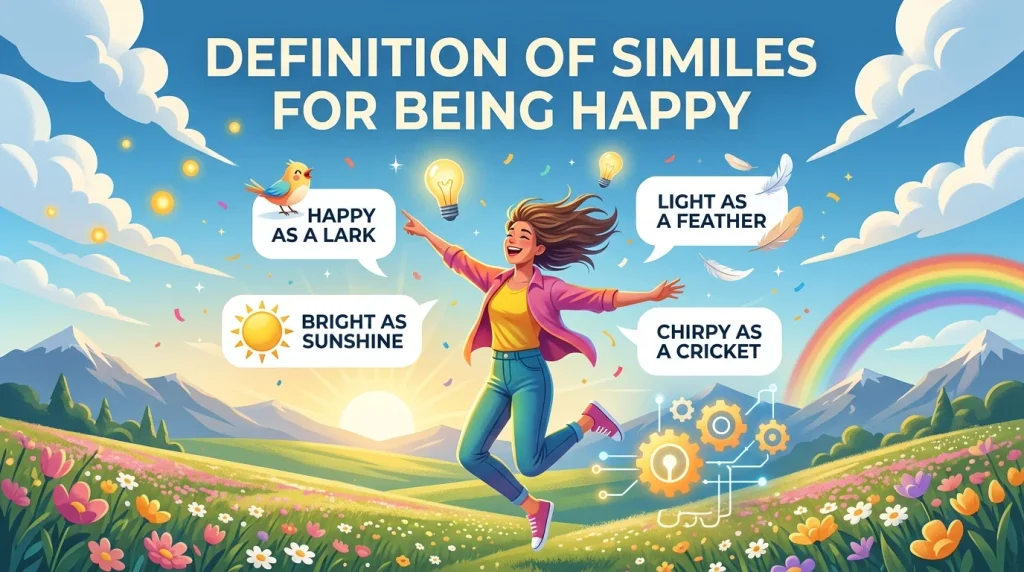
A simile for being happy is a comparison of happiness, a happy person, or a joyful experience to something else. The comparison helps communicate an emotion through a recognizable image.
For example, consider this sentence:
After hearing that she had passed her final examination, Maria was as happy as a lark.
The simile compares Maria’s happiness to the cheerful image associated with a lark. It helps readers understand her emotional state more clearly than the sentence, “Maria was happy.”
Purpose of Happy Similes
Happy similes serve several purposes:
- Make descriptions vivid: They help readers imagine a feeling.
- Express different levels of happiness: Some suggest mild contentment, while others communicate overwhelming excitement.
- Improve creative writing: They make stories, poems, and personal essays more expressive.
- Make conversation engaging: They help speakers communicate feelings naturally.
- Show rather than tell: They demonstrate an emotion through imagery instead of merely naming it.
Common Similes for Happiness
Here are some popular expressions and what they mean.
| Simile | Meaning | Best use |
| As happy as a clam | Comfortable and content | Everyday conversation |
| As happy as a lark | Cheerful and carefree | Descriptive writing |
| Like a ray of sunshine | Bright, positive, and uplifting | Describing a person |
| Walking on air | Extremely happy | Good news or success |
| As happy as a child on Christmas morning | Excited and full of anticipation | Celebrations |
| Grinning from ear to ear | Showing great happiness through a wide smile | Stories and conversation |
| Like a bird set free | Joyful because of newfound freedom | Personal achievements |
| As bright as sunshine | Cheerful and radiant | Character descriptions |
| Like winning the lottery | Overwhelmed by unexpected good fortune | Informal conversation |
| As happy as can be | Completely satisfied or joyful | Simple descriptions |
Some expressions in the table are conventional similes, while others are related figurative expressions. For example, “grinning from ear to ear” is an idiom, and “walking on air” is an idiomatic expression that conveys happiness.
Definition of “As Happy as a Clam”
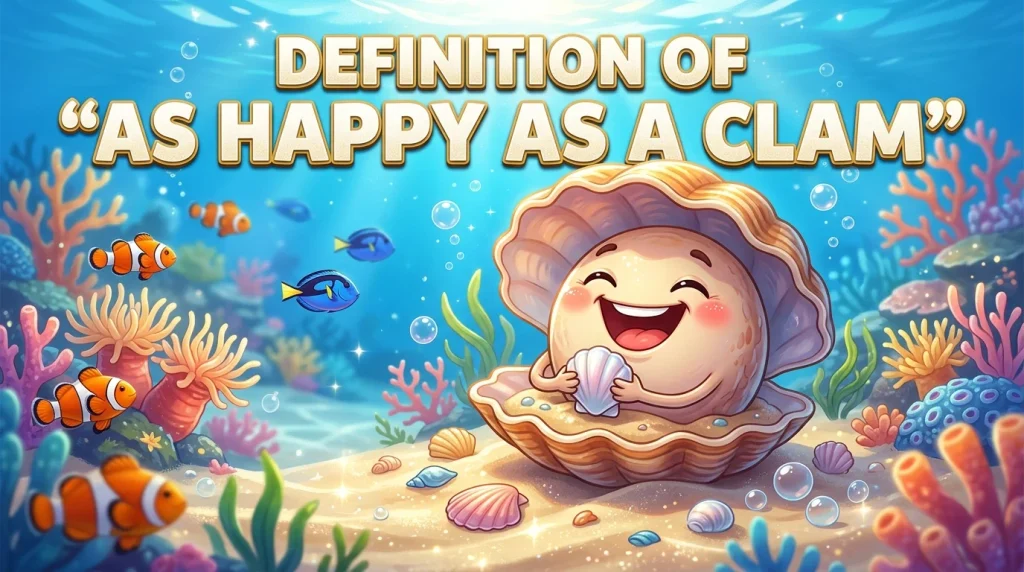
“As happy as a clam” is an idiomatic simile used to describe someone who feels comfortable, content, and satisfied.
The expression is commonly associated with the longer phrase “as happy as a clam at high tide.” At high tide, clams are less exposed to predators, which helps explain the expression’s traditional association with contentment.
Meaning and Purpose
This simile generally communicates a peaceful, uncomplicated kind of happiness. It often suggests that someone is enjoying a situation without worrying about problems.
For example:
After finishing all her assignments, Emma relaxed on the sofa, as happy as a clam.
The expression is especially useful when describing someone who feels satisfied with their circumstances.
When This Simile Works Best
Use “as happy as a clam” when describing:
- Someone enjoying a relaxing weekend.
- A person who feels comfortable at home.
- A child enjoying a favorite activity.
- Someone satisfied with a simple pleasure.
- A person who is content with how things are going.
It is informal and friendly, making it particularly suitable for everyday conversation and lighthearted writing.
Definition of “As Happy as a Lark”
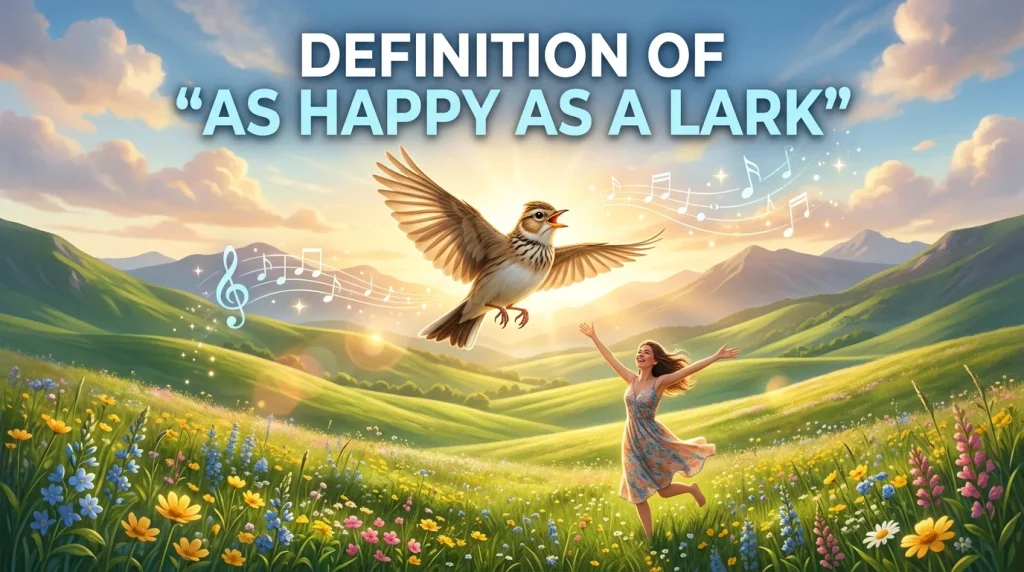
“As happy as a lark” is a traditional simile that describes someone cheerful, lively, and carefree.
Larks are associated in literature and common imagery with singing and open skies. Comparing someone to a lark suggests a lighthearted, joyful mood.
Meaning and Purpose
This expression emphasizes cheerfulness rather than simply feeling comfortable or satisfied.
For example:
After receiving the invitation to visit her best friend, Sophie skipped down the street, as happy as a lark.
The comparison helps readers imagine someone whose happiness is visible in their behavior.
When This Simile Works Best
Use “as happy as a lark” when describing:
- Someone who wakes up in a good mood.
- A child enjoying a sunny day.
- A person celebrating a personal achievement.
- Someone singing or laughing with delight.
- A cheerful character in a story.
This simile is especially effective in descriptive writing, children’s stories, and informal conversation.
Main Differences Between Similes for Being Happy
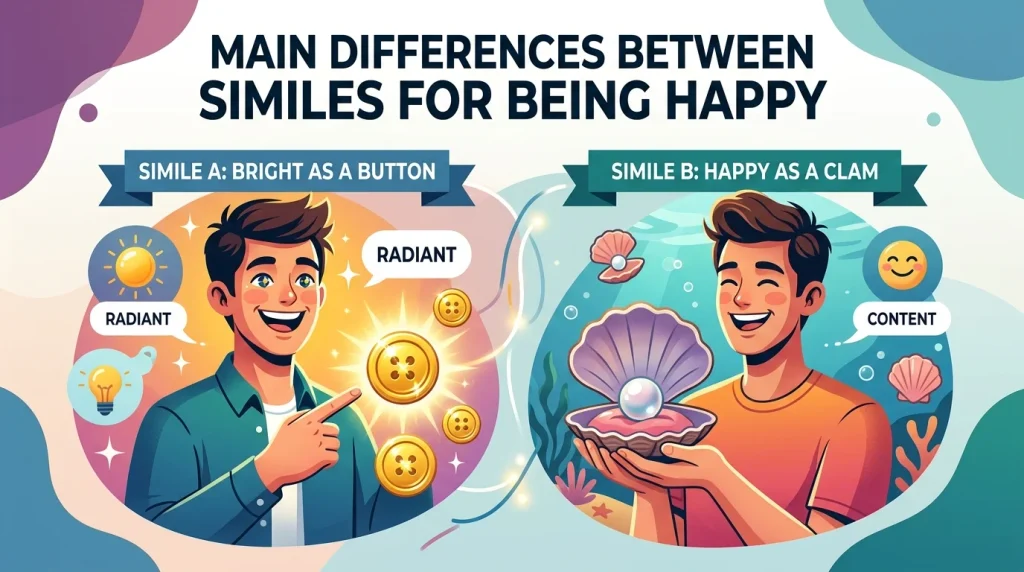
Although happy similes communicate positive emotions, they differ in tone, intensity, imagery, and context.
1. Difference in Meaning
“As happy as a clam” emphasizes contentment and comfort. “As happy as a lark” emphasizes cheerfulness and carefree energy.
“Walking on air” suggests intense happiness, often following a significant success or wonderful surprise. “Like a ray of sunshine” focuses more on how a person’s positive attitude affects others.
2. Difference in Emotional Intensity
Not every happy simile communicates the same level of excitement.
- Mild happiness: As happy as a clam.
- Cheerful happiness: As happy as a lark.
- Visible delight: Grinning from ear to ear.
- Overwhelming happiness: Walking on air.
- Excited anticipation: As happy as a child on Christmas morning.
These categories are guidelines rather than strict definitions. Context determines the exact feeling an expression conveys.
3. Difference in Usage
Some expressions describe a person’s general mood, while others describe a temporary emotional reaction.
For example:
He was as happy as a clam in his new home.
This sentence emphasizes ongoing comfort and satisfaction.
She was walking on air after receiving her acceptance letter.
This sentence emphasizes a strong emotional reaction to good news.
4. Difference in Tone
Some similes sound traditional, some sound conversational, and others are more poetic.
| Expression | Tone | Main emphasis |
| As happy as a clam | Casual and idiomatic | Contentment |
| As happy as a lark | Traditional and descriptive | Cheerfulness |
| Like a ray of sunshine | Warm and expressive | Positive influence |
| Walking on air | Informal and idiomatic | Intense joy |
| Like a bird set free | Poetic | Freedom and relief |
| As happy as a child on Christmas morning | Conversational and vivid | Excitement |
5. Difference in Imagery
The image behind each simile influences how the reader interprets the emotion.
- A clam suggests comfort and contentment.
- A lark suggests cheerfulness and liveliness.
- Sunshine suggests warmth, brightness, and positivity.
- Walking on air suggests feeling unusually light and carefree.
- A bird set free suggests relief, freedom, and renewed happiness.
Choosing the right image makes your writing more precise and memorable.
More Types of Similes for Happiness
Happy similes can be organized by the particular emotion you want to express.
Similes for Extreme Happiness
Use these when a character experiences overwhelming joy.
- As happy as a child on Christmas morning.
- As if walking on air.
- As happy as someone who has won the lottery.
- Like a balloon floating into the sky.
- Like sunshine bursting through dark clouds.
Example: When Daniel learned that his family was coming home, he felt as if he were walking on air.
Similes for Quiet Contentment
These expressions suggest peace, satisfaction, and emotional comfort.
- As happy as a clam.
- Like a cat basking in the sunshine.
- As content as a bird in its nest.
- Like a warm blanket on a cold evening.
- As peaceful as a lake at sunrise.
Example: Sitting beside the fireplace with her favorite book, Nina was as happy as a clam.
Similes for Cheerfulness
These are useful for describing people with positive moods.
- As happy as a lark.
- Like a ray of sunshine.
- As bright as a sunny morning.
- Like a songbird at dawn.
- Like a garden blooming in spring.
Example: Our new teacher was like a ray of sunshine, making everyone feel welcome.
Similes for Happiness After Relief
Sometimes happiness follows a stressful or difficult experience.
- Like a bird set free.
- Like sunshine after a storm.
- Like a heavy weight lifted from the shoulders.
- Like finding an oasis in a desert.
- Like seeing a clear sky after days of rain.
Example: After hearing that her missing passport had been found, she felt like a bird set free.
These comparisons can express relief as well as happiness, so they work especially well when a positive outcome follows a challenge.
Grammar Guide
Similes for being happy are usually phrases rather than individual vocabulary words. Their grammatical role depends on how they are used in a sentence.
How Each Expression Is Used in Sentences
1. Using a simile after a linking verb
A linking verb connects the subject to a description of its state or condition.
Pattern: Subject + linking verb + simile.
Examples:
- James was as happy as a clam.
- The children seemed as happy as larks.
- After the announcement, I felt as if I were walking on air.
2. Using a simile after an action
A simile can describe how someone behaves or moves.
Pattern: Subject + action verb + comparison.
Examples:
- She danced like a bird set free.
- He smiled like a child on Christmas morning.
- The little girl skipped along as happily as a lark.
3. Using a simile to describe a person
Some comparisons describe a person’s effect on others.
Examples:
- Our grandmother is like a ray of sunshine.
- The new employee is as cheerful as a songbird.
- Her presence was like sunshine after a storm.
4. Using a simile in creative writing
Similes can add emotional depth to fiction, poetry, and descriptive essays.
Examples:
- Happiness filled his heart like sunlight flooding a room.
- Her laughter rang out like birdsong on a spring morning.
- He felt as light as a feather after the good news.
Quick Tips for Writing and Speaking
- Match the expression to the emotion. Decide whether you mean contentment, excitement, relief, or cheerfulness.
- Consider your audience. Familiar expressions work well in everyday conversation, while original comparisons may be more effective in poetry.
- Avoid unnecessary complexity. A simple comparison is often more powerful than a long, complicated one.
- Use context to explain the feeling. Good news, a celebration, or a peaceful afternoon can help readers understand why someone is happy.
- Vary your vocabulary. Combine similes with words such as delighted, thrilled, content, and overjoyed.
- Read the sentence aloud. If the comparison sounds unnatural, choose a more familiar expression or create a clearer image.
When to Use Each One
Choose your simile according to the situation and the kind of happiness you want to communicate.
When to Use “As Happy as a Clam”
Use this expression for someone comfortable, relaxed, and satisfied.
Examples:
- A student relaxing after finishing an exam.
- A family enjoying a quiet evening at home.
- An employee satisfied with a comfortable working environment.
- A child playing with a favorite toy.
- A traveler enjoying a peaceful holiday.
Example sentence: With no deadlines to worry about, Marcus was as happy as a clam.
When to Use “As Happy as a Lark”
Use this expression for someone cheerful, energetic, and carefree.
Examples:
- A person waking up in a good mood.
- Children playing outside.
- A friend celebrating good news.
- A character singing happily in a novel.
- Someone enjoying a lively social gathering.
Example sentence: After a refreshing night’s sleep, Ava arrived at school as happy as a lark.
When to Use “Walking on Air”
Use this expression when happiness feels unusually intense.
Examples:
- Getting accepted into a university.
- Receiving a long-awaited promotion.
- Reuniting with a loved one.
- Achieving an important personal goal.
- Receiving unexpected good news.
Example sentence: After winning the scholarship, Omar felt as if he were walking on air.
When to Use “Like a Ray of Sunshine”
Use this expression to describe a person whose presence makes others feel happier.
Examples:
- A supportive teacher encouraging students.
- A friend cheering someone up.
- A colleague creating a positive workplace.
- A family member making gatherings enjoyable.
- A volunteer bringing comfort to others.
Example sentence: Her kindness made her a ray of sunshine in the lives of everyone around her.
When to Use “Like a Bird Set Free”
Use this expression when happiness comes from freedom, release, or overcoming a restriction.
Examples:
- Finishing a demanding project.
- Leaving a stressful situation.
- Recovering from a difficult period.
- Gaining independence.
- Resolving a problem that has caused anxiety.
Example sentence: When the final examination ended, he felt like a bird set free.
Which One to Use: Decision Guide

Choosing the right simile becomes easier when you identify the main emotion first.
| If you want to describe… | Choose this expression | Why it works |
| Peaceful satisfaction | As happy as a clam | Suggests comfort and contentment |
| A cheerful mood | As happy as a lark | Suggests carefree happiness |
| Intense joy after good news | Walking on air | Communicates emotional excitement |
| Someone who cheers others up | Like a ray of sunshine | Highlights positive influence |
| Freedom after a difficult situation | Like a bird set free | Connects happiness with release |
| Excitement before a celebration | As happy as a child on Christmas morning | Conveys anticipation and delight |
| A visible expression of joy | Grinning from ear to ear | Shows happiness through a smile |
Self-Assessment: Fill in the Blanks
Test your understanding of happy similes by choosing the expression that best fits each situation.
Use these expressions: as happy as a clam, as happy as a lark, walking on air, like a ray of sunshine, like a bird set free.
- After finishing his assignments and settling down in his favorite chair, Ahmed was ______.
- The cheerful teacher made the classroom brighter; she was ______ to her students.
- After receiving the news that she had won a scholarship, Sana felt as if she were ______.
- The children were ______ while singing and playing in the sunny garden.
- After leaving a stressful situation, he felt ______.
- Someone comfortable and satisfied with a peaceful life is ______.
- After securing a major business contract, the entrepreneur was ______.
- A person who spreads warmth and positivity wherever they go is ______.
- When the final examination ended, the student felt ______.
- A cheerful person who sings happily throughout the morning may be described as ______.
- After resolving a long-standing technical problem, the developer was ______.
- The volunteer encouraged everyone and was ______ to the community.
- After gaining independence and leaving a restrictive environment, she felt ______.
- A relaxed person enjoying a quiet afternoon at home is ______.
- After receiving an unexpected promotion, he was ______.
- The lively child laughing and skipping through the park was ______.
- The kind nurse brought comfort to worried patients and was ______.
- After overcoming a difficult personal challenge, she felt ______.
- A person who is content with their comfortable surroundings is ______.
- When the family announced an exciting reunion, he felt as if he were ______.
Answers
- As happy as a clam: He feels relaxed and satisfied after completing his work.
- Like a ray of sunshine: The teacher brings warmth and positivity to others.
- Walking on air: Winning a scholarship creates intense happiness.
- As happy as larks: The children are cheerful and carefree.
- Like a bird set free: Leaving a stressful situation brings a feeling of freedom.
- As happy as a clam: The expression emphasizes contentment.
- Walking on air: Securing an important contract creates excitement.
- Like a ray of sunshine: The phrase describes a person who brightens others’ lives.
- Like a bird set free: Finishing an examination can feel like a release from pressure.
- As happy as a lark: The expression conveys cheerfulness.
- Walking on air: Resolving a major problem can create intense satisfaction and excitement.
- Like a ray of sunshine: The volunteer positively affects the community.
- Like a bird set free: The expression communicates freedom and relief.
- As happy as a clam: The person is comfortable and content.
- Walking on air: An unexpected promotion can produce overwhelming joy.
- As happy as a lark: The child demonstrates lively, carefree happiness.
- Like a ray of sunshine: The nurse brings comfort and positivity to others.
- Like a bird set free: Overcoming a challenge can create a sense of liberation.
- As happy as a clam: The expression is appropriate for someone content.
- Walking on air: The exciting news creates intense happiness and anticipation.
Final Verdict
Similes for being happy make communication more vivid by comparing emotions to familiar images. The best expression depends on whether you want to describe contentment, cheerfulness, intense excitement, positive influence, or relief.
- Choose as happy as a clam when someone is relaxed, comfortable, and satisfied.
- Choose as happy as a lark when someone is cheerful, lively, and carefree.
- Choose walking on air when someone feels extremely happy after wonderful news.
- Choose like a ray of sunshine when describing a person who makes others feel happier.
- Choose like a bird set free when happiness comes from freedom or relief.
There is no single simile that is always correct for every happy situation. Instead, select the expression that most accurately matches the emotion, context, and tone of your sentence.
The simplest rule is to match the image to the feeling. When your comparison reflects the kind of happiness you want to express, your writing becomes clearer, more natural, and more memorable.
Conclusion
Similes for being happy are a wonderful way to make your writing more expressive, meaningful, and enjoyable to read. Instead of simply saying that someone feels happy, you can use creative comparisons to show the depth of their emotions. Expressions such as “as happy as a clam,” “as happy as a lark,” “walking on air,” and “like a ray of sunshine” each communicate a slightly different kind of joy. Some describe peaceful contentment, while others express excitement, freedom, or the happiness someone brings to others.
Choosing the right simile depends on the situation, your audience, and the feeling you want to convey. Whether you are writing a school assignment, creating a story, composing a poem, or enjoying an everyday conversation, these expressions can make your words more vivid and memorable. Explore different similes for being happy, practice using them in sentences, and let your words express happiness in a natural, colorful, and engaging way.
FAQs
What are similes for being happy?
Similes for being happy are expressions that compare happiness to familiar objects, animals, experiences, or situations. They commonly use the words “like” or “as” to create a vivid picture of an emotion. For example, “as happy as a lark” describes someone who feels cheerful and carefree, while “walking on air” expresses intense happiness after receiving wonderful news.
What is the most common simile for happiness?
“As happy as a clam” and “as happy as a lark” are familiar similes used to describe happiness. The first usually emphasizes comfort and contentment, while the second suggests cheerfulness and carefree energy. The best choice depends on the feeling you want to express and the context of your sentence. Both are useful in everyday conversation and descriptive writing.
What is a simile for being extremely happy?
“Walking on air” is a popular expression for describing someone who feels extremely happy. For example, “She was walking on air after receiving her university acceptance letter.” Another effective comparison is “as happy as a child on Christmas morning,” which conveys excitement and anticipation. These expressions help readers understand intense joy without relying on the word “happy” alone.
What is a simile for a happy person?
“As happy as a lark” is a useful simile for describing a cheerful person. You can also say someone is “like a ray of sunshine” when their positive attitude makes other people feel happier. For example, “Our new teacher is like a ray of sunshine because she always encourages her students.” This comparison highlights both personality and emotional warmth.
What is a simile for happiness in creative writing?
In creative writing, a simile such as “her happiness sparkled like sunlight on water” creates a vivid emotional image. You can also write, “He felt like a bird set free after finishing his difficult assignment.” Original comparisons help readers imagine the character’s feelings. Choose images that suit the scene, character, and mood rather than adding comparisons simply for decoration.
How do you use similes for happiness in a sentence?
Place a happiness simile where it naturally describes a person’s feelings, behavior, or personality. For example, “After passing the examination, Amir was walking on air.” You can also write, “She was as happy as a clam in her peaceful garden.” Linking verbs such as “was,” “felt,” and “seemed” often make it easy to incorporate these expressions into sentences.
What is the difference between a simile and a metaphor for happiness?
A simile directly compares two things using words such as “like” or “as,” while a metaphor describes one thing as another without making that explicit comparison. For example, “She was like sunshine” is a simile, whereas “She was sunshine” is a metaphor. Both can communicate happiness, but they create slightly different effects and are useful in different writing styles.
What are some simple similes for happiness for students?
Students can use familiar expressions such as “as happy as a lark,” “as happy as a clam,” and “like a ray of sunshine.” Another option is “as happy as a child on Christmas morning.” These phrases are easy to understand and remember. Students should practice using each expression in a complete sentence and choose one that accurately matches the emotion being described.
Can similes for happiness be used in everyday conversation?
Yes, similes for happiness can make everyday conversations more expressive and natural. You might say, “I’m walking on air because I got the job,” or “The children are as happy as larks today.” Expressions such as “like a ray of sunshine” are also useful when complimenting someone’s cheerful personality. Choose familiar phrases that suit the situation and your audience.
How can I choose the best simile for being happy?
Start by identifying the specific emotion you want to communicate. Use “as happy as a clam” for contentment, “as happy as a lark” for cheerfulness, and “walking on air” for intense excitement. Choose “like a ray of sunshine” to describe someone who brightens other people’s lives. Matching the expression to the context makes your writing clearer, more accurate, and more memorable.